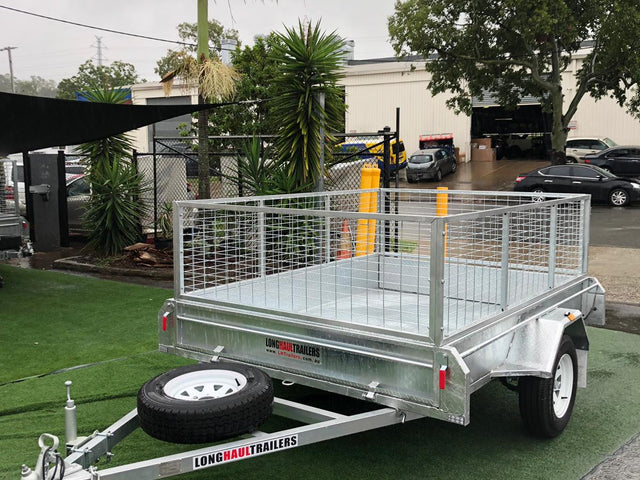
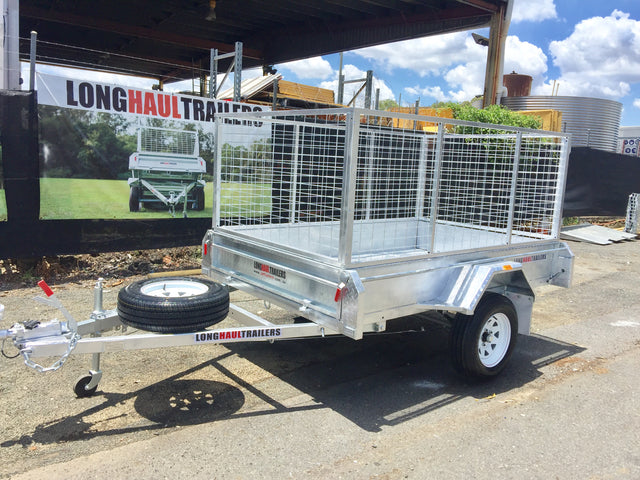
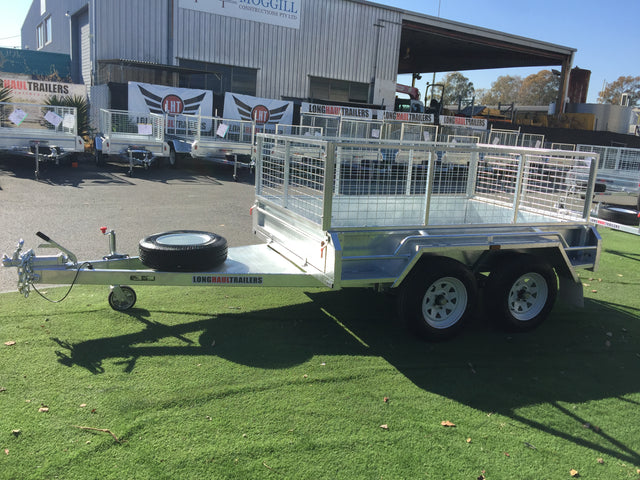
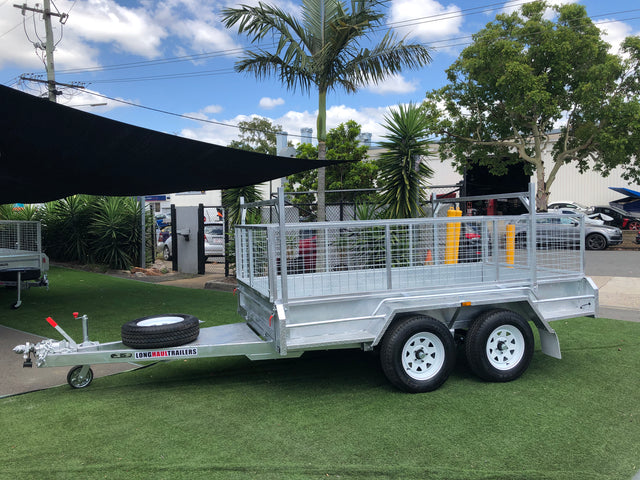
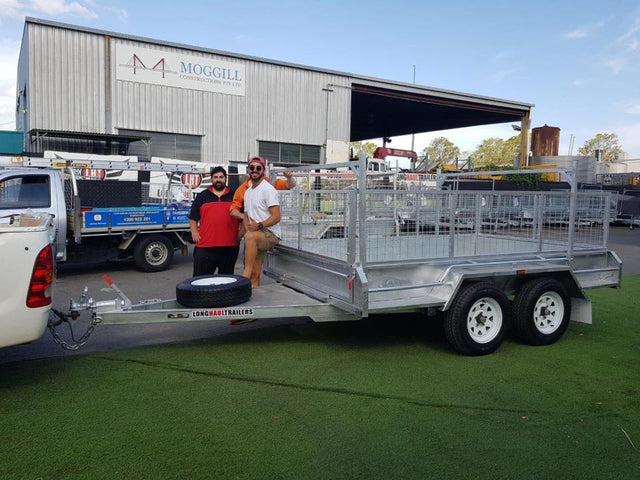


Moving a fridge, washing machine, sofa or cabinets with a box trailer requires more than simply making everything fit. Plan the load, protect fragile items and use appropriate restraints.
Quick overview: Start with measurements and weight • Protect the item without compromising restraint • Load heavy items low and securely • Use rated straps and anchor points • Avoid damage during loading • Think about rain and road grime • Drive with extra margin • Choosing a trailer for moving.
Start with measurements and weight
Measure each item including packaging, handles and any trolley you plan to use. Compare the dimensions with the trailer's internal floor and tailgate opening. Check the weight of heavy appliances and furniture against the trailer's available payload and your tow vehicle's limits. Remember that moving blankets, trolleys and accessories also contribute to the total load.
Protect the item without compromising restraint
Moving blankets, edge protectors and suitable padding can help prevent scratches. However, padding is not a load restraint and should not make straps slip. Protect corners where straps could damage furniture, and follow appliance manufacturers' transport instructions. Some appliances have specific requirements for keeping them upright, securing moving parts or waiting before restarting them.
Load heavy items low and securely
Place heavy appliances where they can be properly supported and restrained while maintaining suitable trailer balance. Avoid putting all the weight behind the axle or pressing heavy items against a tailgate that is not designed to take that load. Keep the centre of gravity low. A tall, unsecured cabinet can topple even at modest speeds or during a sharp turn.
Use rated straps and anchor points
Choose restraints that suit the mass, shape and movement risk of each item. Inspect straps for damage, protect them from sharp edges and connect them only to suitable anchor points. Prevent sliding forward, backward and sideways, as well as tipping. A rope casually tied over the top may not provide adequate restraint. Recheck tension after a short drive.
Avoid damage during loading
Use enough people and suitable lifting aids for heavy or awkward items. Keep hands and feet clear of pinch points. Confirm ramps and tailgates are rated for the task before using them. Never assume a tailgate can safely support a loaded appliance trolley. Plan the unloading sequence so the first item removed does not release another item.
Think about rain and road grime
Cardboard, fabric and electronics can be damaged by water and debris. Use suitable weather protection and ensure any cover is securely attached. A tarp should not obscure lights or the number plate, and it cannot replace proper restraint. For sensitive or valuable furniture, an enclosed transport service may be more appropriate than an open box trailer.
Drive with extra margin
Leave more braking distance and slow before corners and bumps. Avoid sudden acceleration and harsh steering. Stop in a safe place to check that nothing has shifted. If the load moves, do not continue until it is safely secured again.
Choosing a trailer for moving
See our size guide, loading safety guide and box trailer range. If you are unsure whether a bulky item will fit, bring its measurements when you contact us.
Final checklist
Before each trip, check your trailer's mass ratings, the towing vehicle's limits, tyres, coupling, safety chains, lights and cargo restraints. If any component is damaged or the combination feels unstable, resolve the issue before towing. For help choosing a suitable trailer, visit our Sumner showroom or contact our team.
At a glance: choosing by the job
Compact single axle
View options →Heavy-duty braked
View options →Tandem axle
View options →Illustrative selection guide only. Always check your towing limits and the actual trailer specifications.

| Trailer category | Often suited to | Explore |
|---|---|---|
| 750kg ATM single axle | Household jobs and lighter bulky loads | Shop 750kg |
| 1400kg ATM heavy duty | Heavier work when vehicle ratings permit | Shop 1400kg |
| 2000kg ATM tandem | Larger loads and frequent demanding jobs | Shop 2000kg |
ATM is a maximum trailer mass, not cargo payload. Check tare, accessories, vehicle and towbar limits before choosing.
Questions buyers commonly ask
Should I choose the biggest trailer I can afford?
Not necessarily. Bigger trailers need more storage space and can be harder to manoeuvre. The right choice depends on your actual load dimensions and weight, your tow vehicle's limits, and the jobs you expect to do most often.
Does a higher ATM mean I can carry that much cargo?
No. ATM includes the trailer itself as well as its cargo and fitted accessories. Calculate available payload using the actual trailer specifications and check every applicable towing limit.
Can I inspect the trailer before ordering?
Our Sumner warehouse is available for showroom enquiries. Contact us first to confirm the model you want to inspect is on display.
Related advice
- How to Tow and Reverse a Box Trailer: Beginner's Guide
- Box Trailer Maintenance Checklist: Bearings, Tyres, Lights and Brakes
- Trailer Couplings, Safety Chains and Jockey Wheels: What to Check
The right trailer makes the job easier
A well-matched trailer can make tip runs, home renovations and regular work easier. Choose for the loads you actually carry, your vehicle's towing capacity and how much room you have to store it. Our range includes galvanised single-axle, heavy-duty and tandem models, with available extras depending on the trailer.
- 6x4 Box Trailer — see specifications and options
- 7x4 Box Trailer — see specifications and options
- 8x5 Box Trailer — see specifications and options
Ready to compare? Shop all box trailers, use the size guide, or ask us which model suits your job. Visit our Sumner showroom to inspect trailers in person.